What to wear, what to use and what is actually worth it.

What I’d Actually Wear From New York Fashion Week Spring 2027
There is no shortage of New York Fashion Week coverage. By the time the shows are underway, runway galleries, reviews, trend reports, street-style photographs, and declarations about what everyone will supposedly be wearing six months from now are everywhere. I don’t particularly need to add another recap to the pile.

The Fall Uniform Is Back
Summer dressing is lovely in theory: dresses, sandals, lighter fabrics, the occasional attempt at color. But by the time fall starts making its way back into New York, I am ready to return to the clothes that require considerably less discussion. For me, that usually means black.
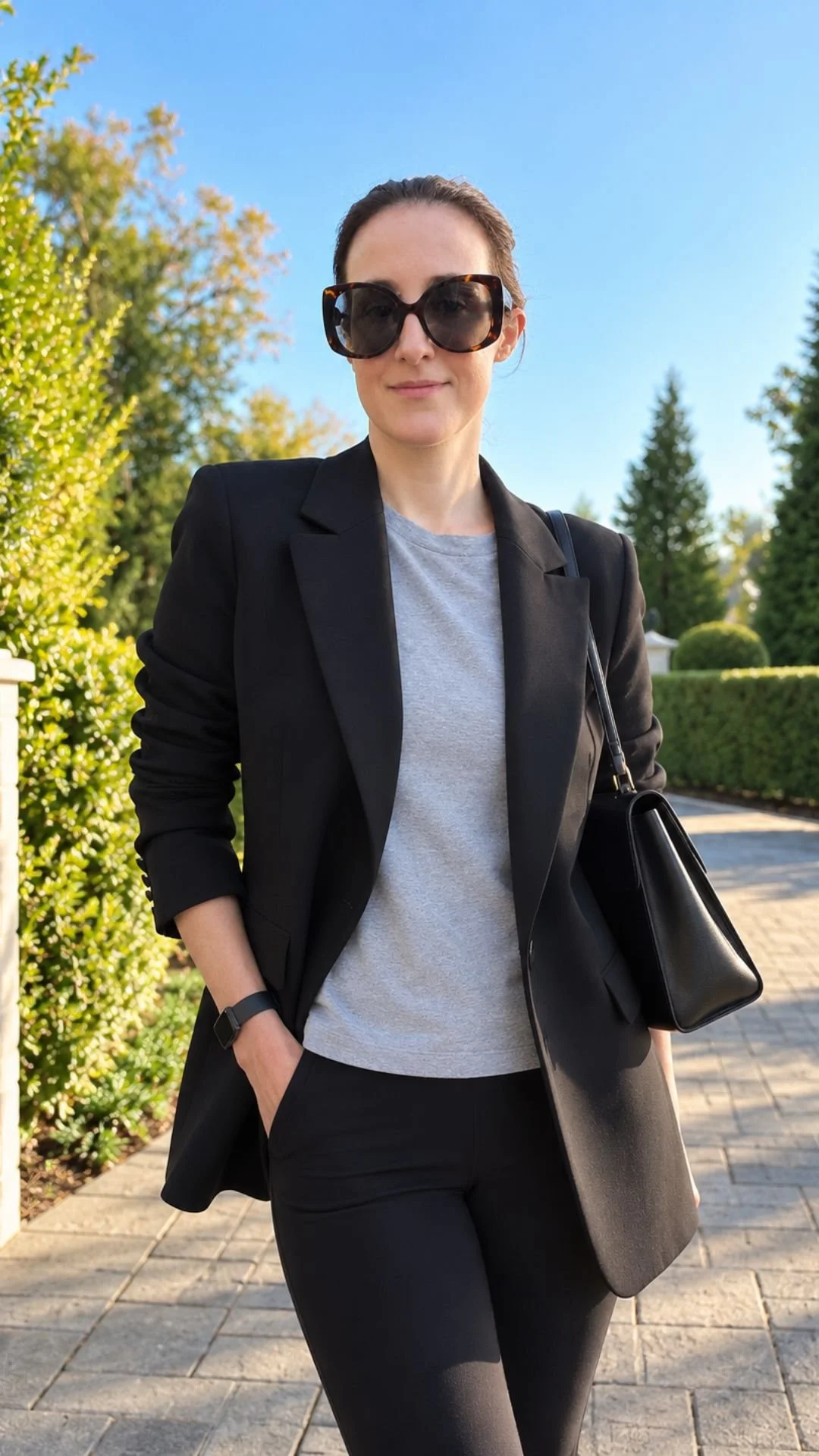
THE BLAZER + BAG FORMULA
Some outfits require a great deal of thought, while others have the right architecture. I have always preferred the latter. When the proportions are right and the foundational pieces are strong, getting dressed becomes considerably easier because you don’t need a closet full of statement pieces to create an interesting look.
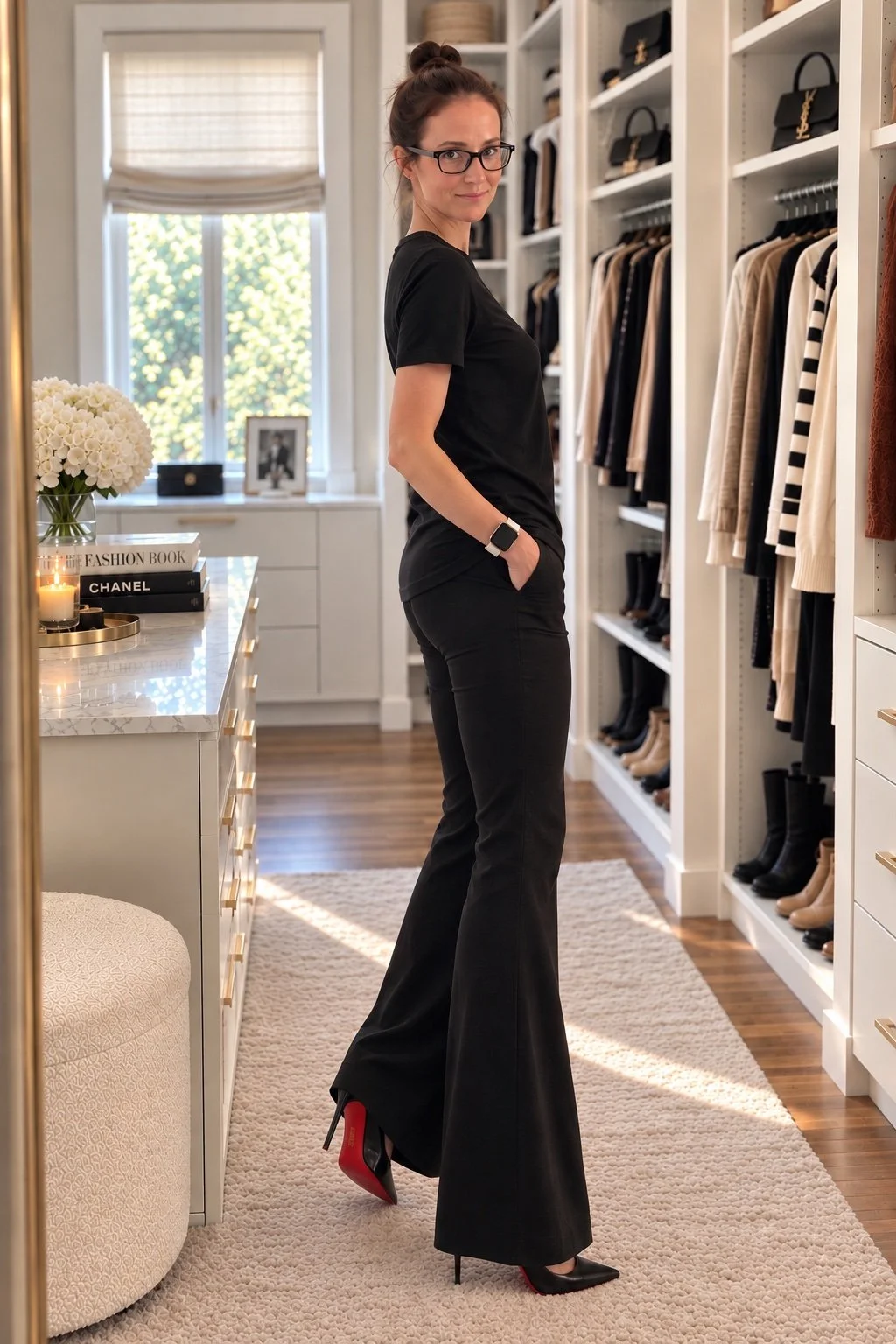
The Flare Is Back: Why This Is the Denim Silhouette to Wear Now
There is a reason certain fashion silhouettes keep finding their way back into our wardrobes. Trends may cycle through exaggerated proportions, new washes, unexpected rises, and novelty details, but the pieces that remain compelling are usually the ones that make us look better.
How to Build an Effortless, Elevated Wardrobe: The Quiet Luxury Essentials That Make Getting Dressed Easier
The best wardrobes aren’t necessarily the ones filled with the most clothes. They are the ones where almost everything works together, where getting dressed doesn’t require an hour of trying on different combinations, and where even the simplest outfit looks considered.
More Clothes? That’s Not the Point
I have reached the point in my life where I am suspicious of anything that requires me to make more decisions than necessary.
This is probably not the most conventional way to begin a fashion article. Still, I think it explains my relationship with clothes better than telling you what is “in” this season. I have never been particularly interested in dressing according to a trend calendar, and I have become even less interested as I have gotten older. I don’t want a closet full of clothes that technically look good but somehow make getting dressed feel like a project. I want clothes that make sense.
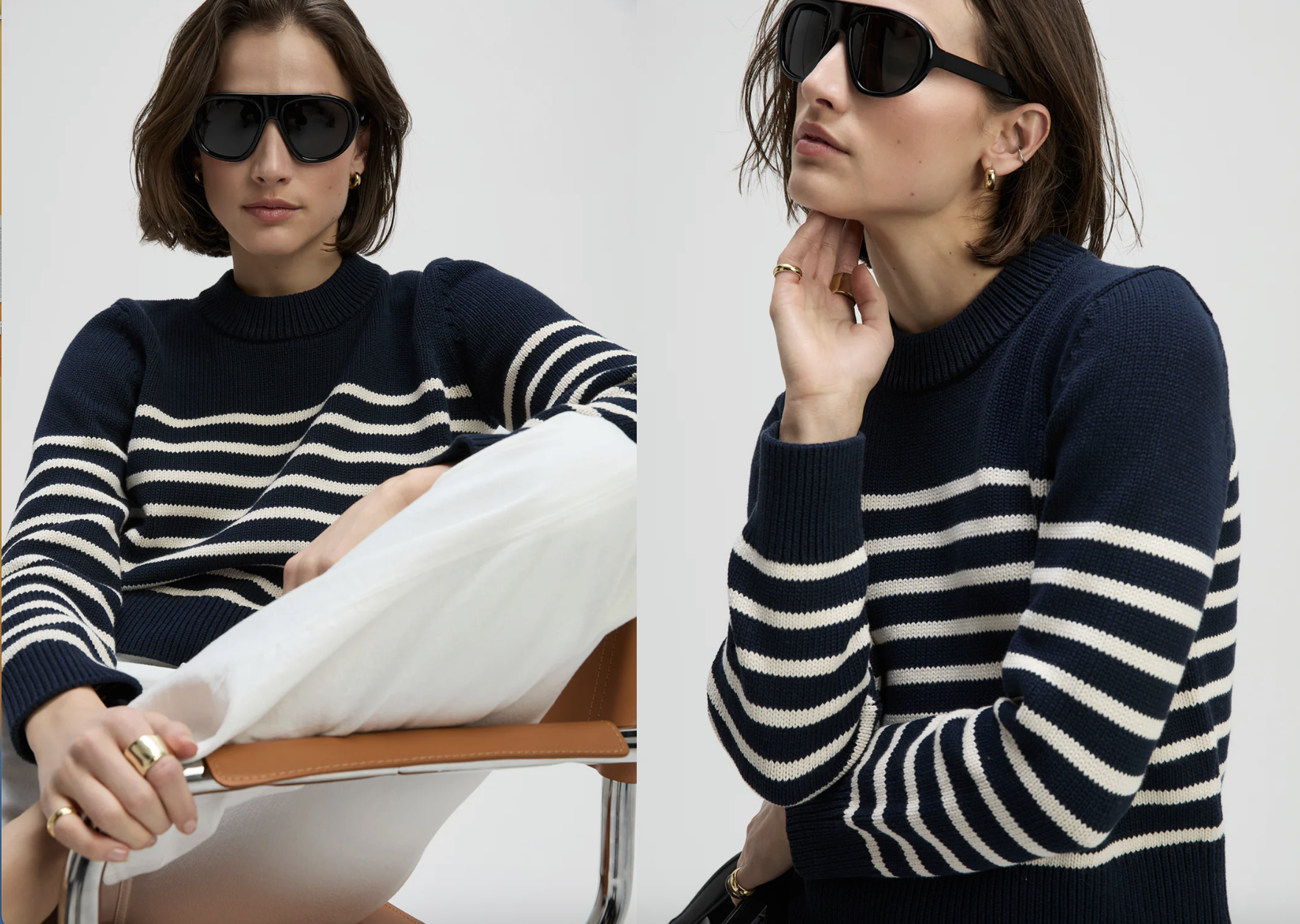
The Well-Fit Striped Sweater: On Getting Dressed When You Have Better Things to Think About
Relief comes from owning a few pieces of attire that never require a decision. You reach for them without thinking, they work without effort, and they make you look like you tried harder than you did. The striped sweater is one of those pieces, and it has been for about a century, which is its own kind of endorsement.
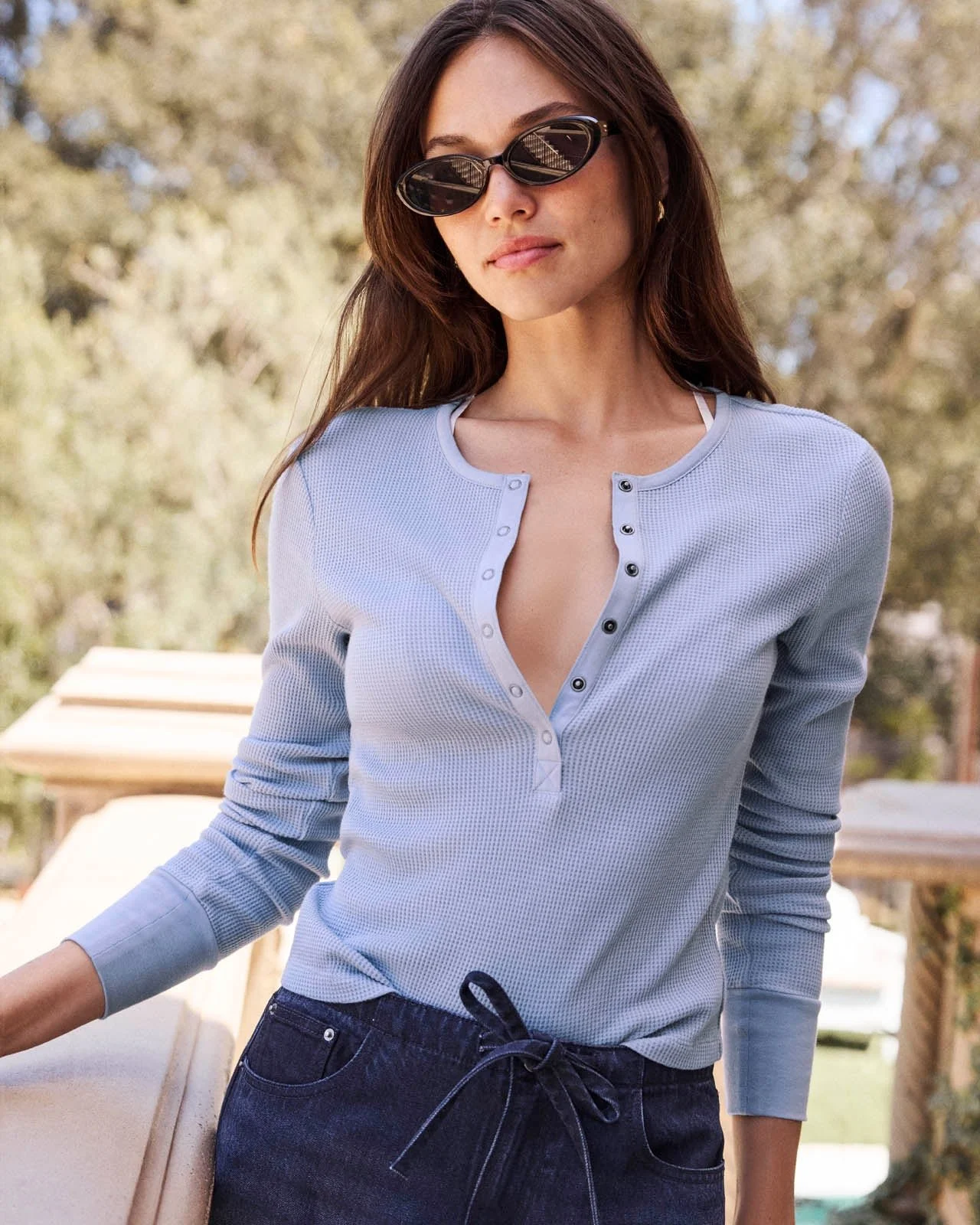
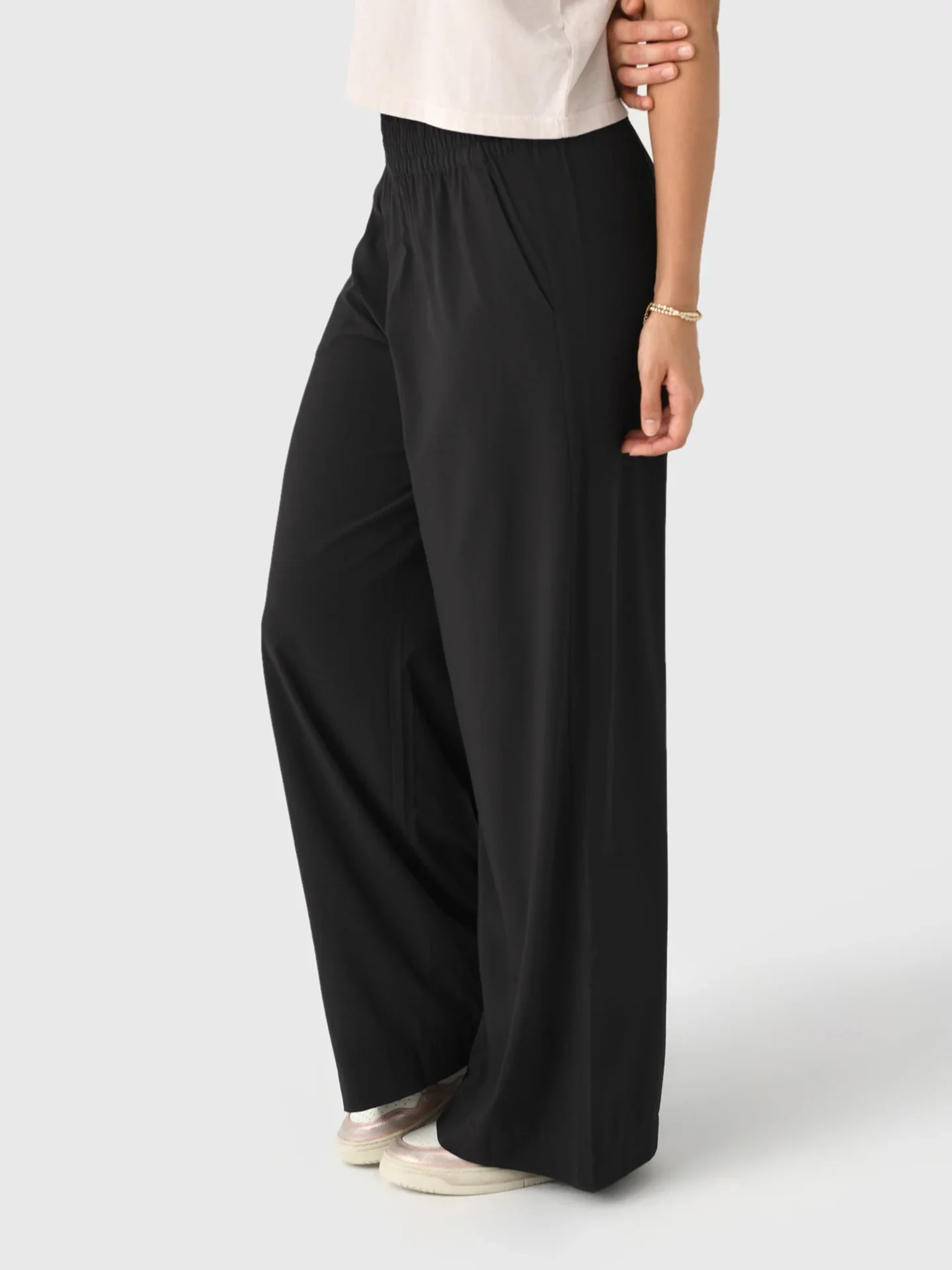
THE UNIFORM YOU’LL ACTUALLY REACH FOR: A THERMAL AND A WIDE-LEG PANT
The most-worn outfit in your closet is rarely the one you most consider. It can be both.
There is an outfit that most women own by accident. It is the thing you put on when you are not thinking about it: the soft top, the easy pant, the combination you reach for on the mornings you have no interest in making a decision. It is usually the most-worn outfit in the closet, and it is rarely the most deliberate one. It just accumulated.
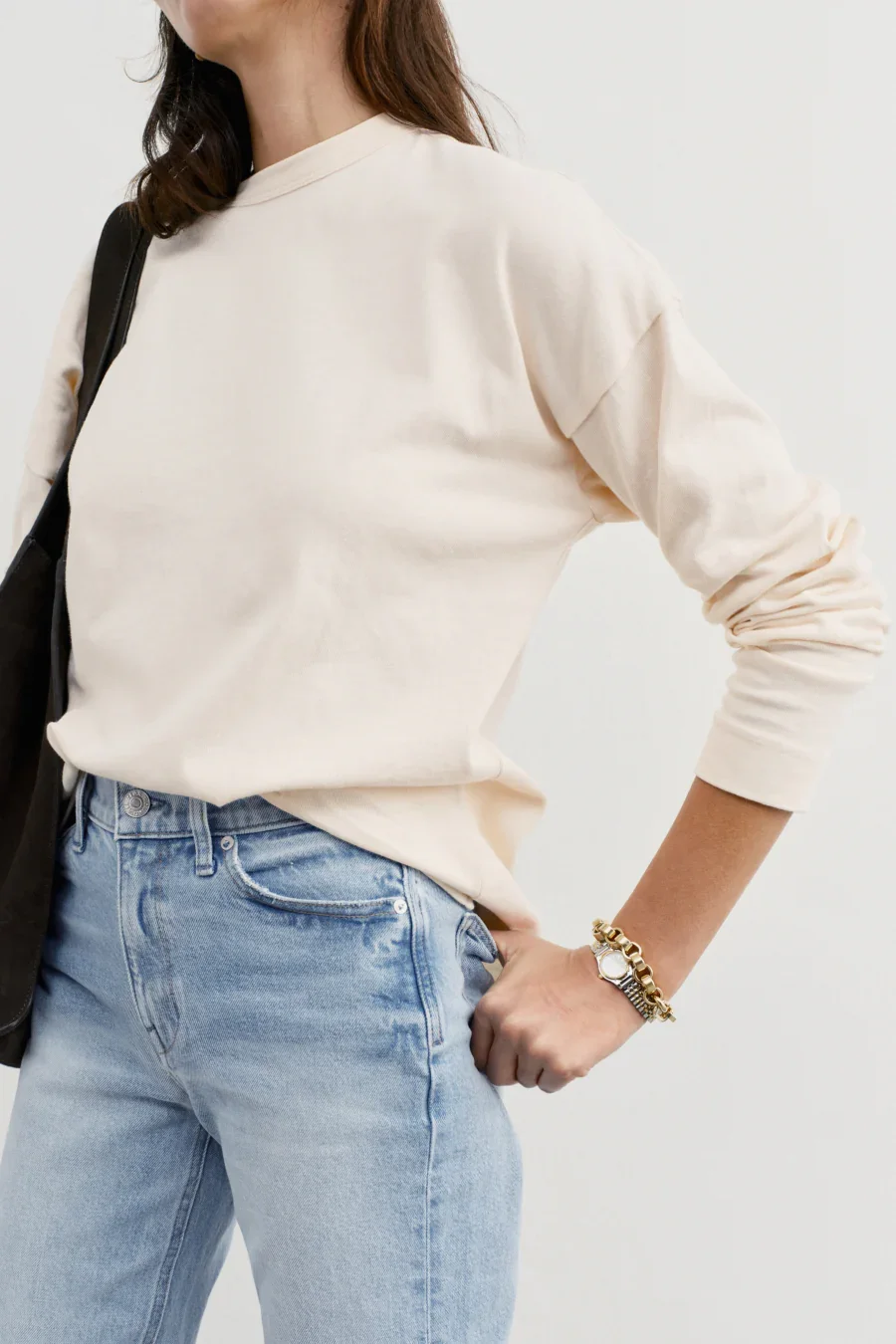
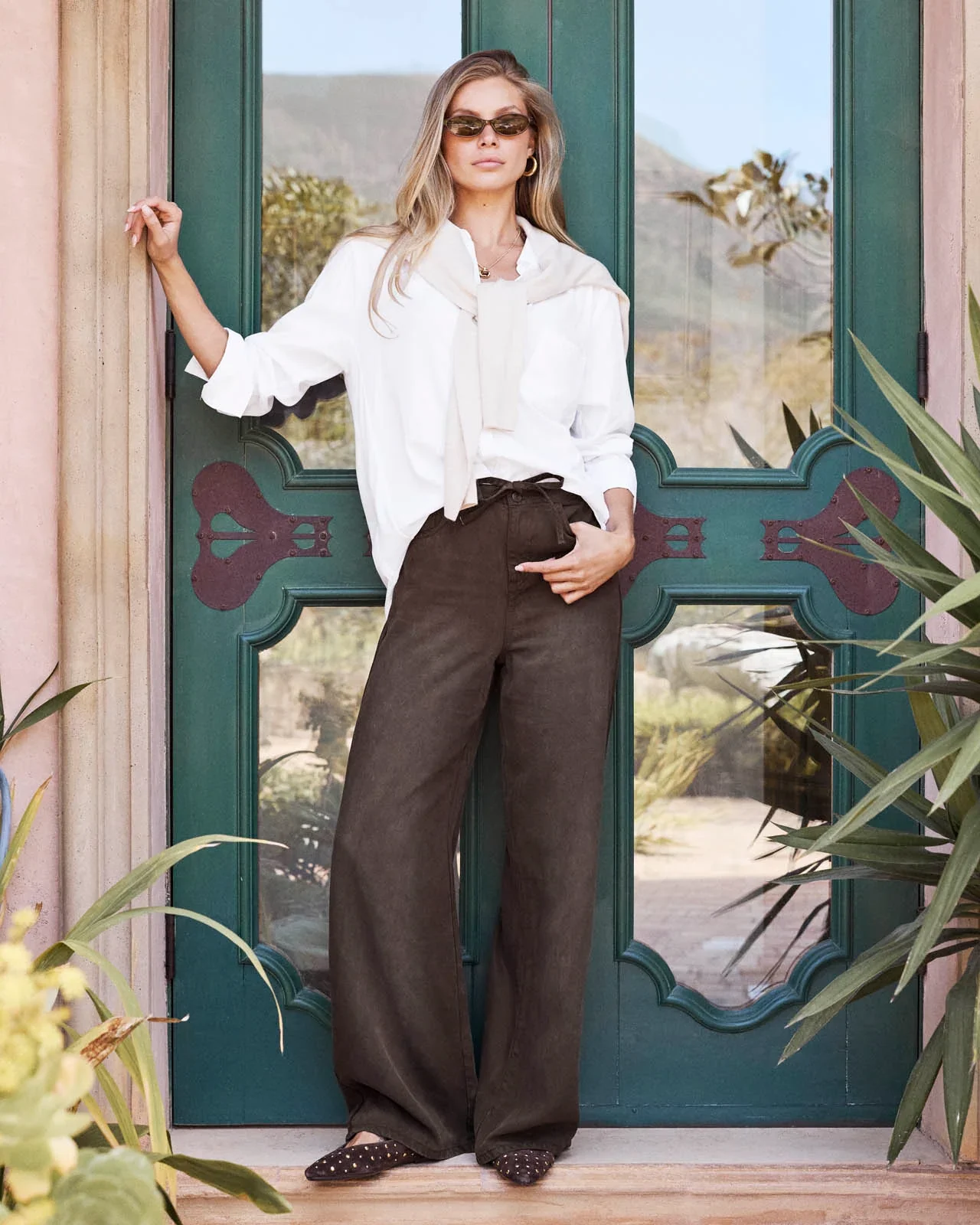
THE CASE FOR VOLUME: TWO PIECES THAT USE SHAPE INSTEAD OF FIT
Most women in their forties have a rule about volume, even if they have never said it out loud. The rule is: fitted reads as intentional; loose reads as giving up. So they buy the tailored version of everything, and then wonder why their wardrobe feels effortful in a way they cannot name.
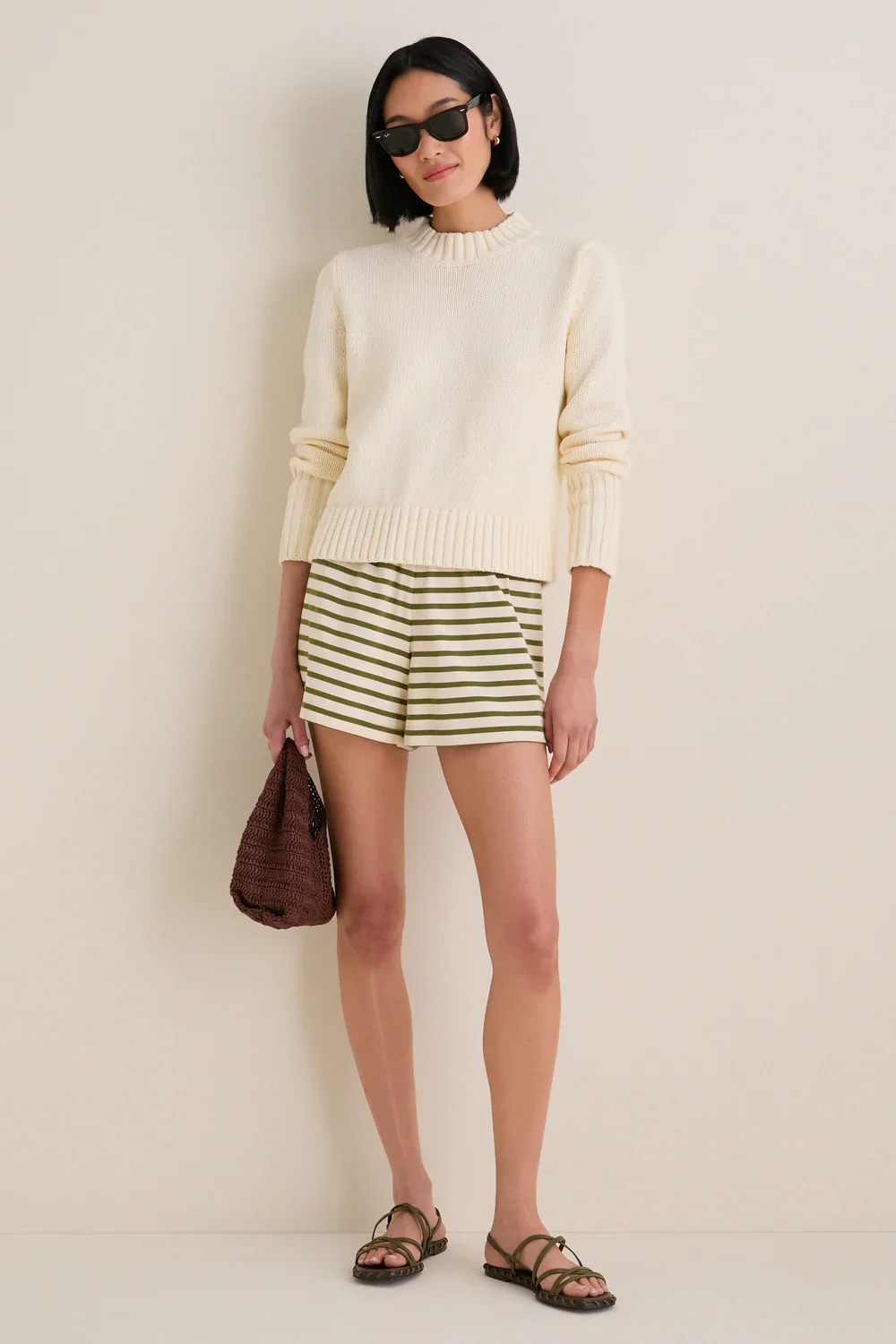
The Sweater and the Dress. Two Pieces. One Summer Edit
On the difference between a piece that anchors your summer and one that defines it.
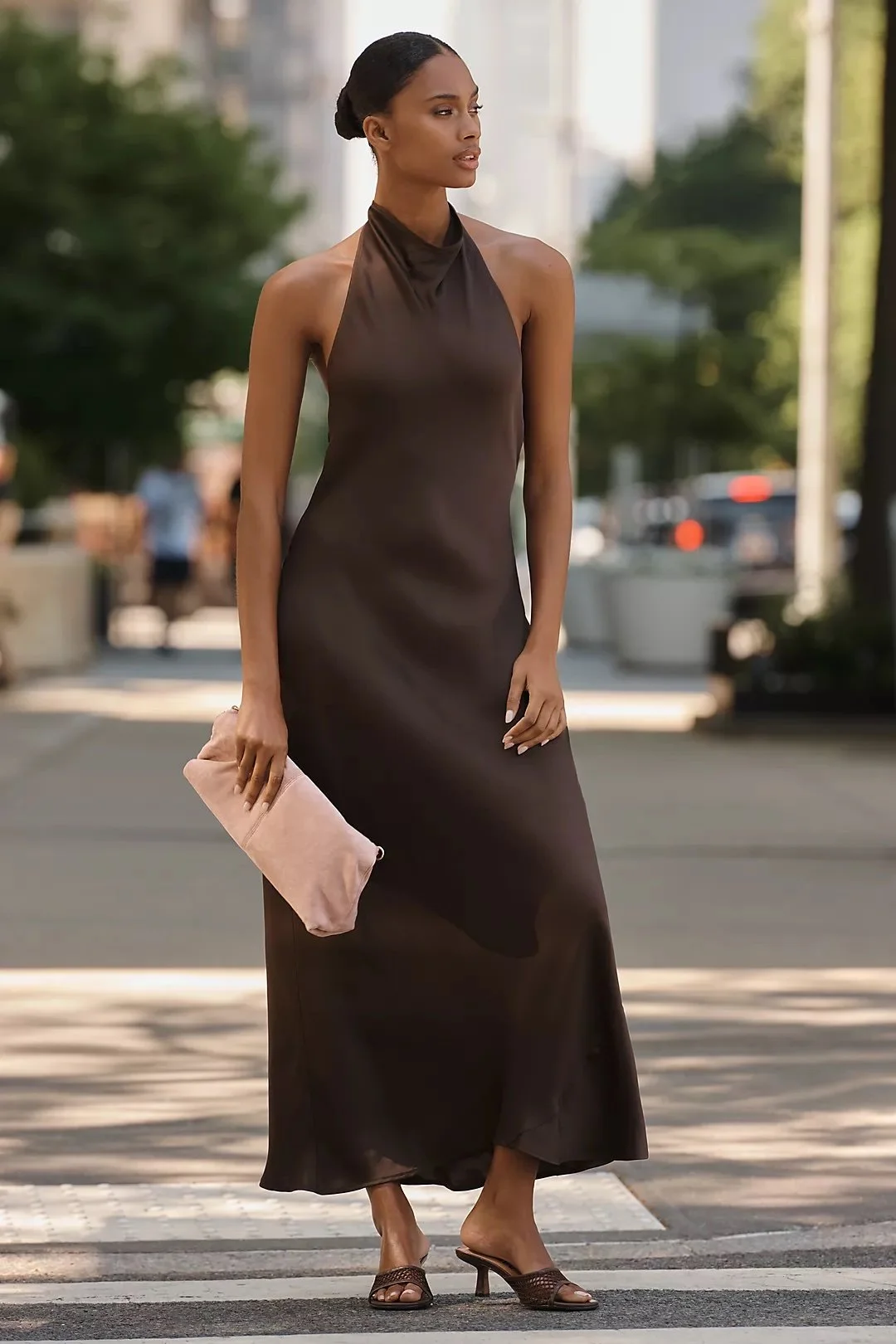
Two Dresses. Two Problems Solved.
What to wear when presence matters and when it just needs to be Tuesday.
I don't write about specific pieces every week. When I do, it's because something has passed every filter I apply before I'd put it in front of you: does it belong in a real wardrobe, not a fantasy one; does it hold up across more than one context; does the woman wearing it look like herself, or like she's wearing a dress.
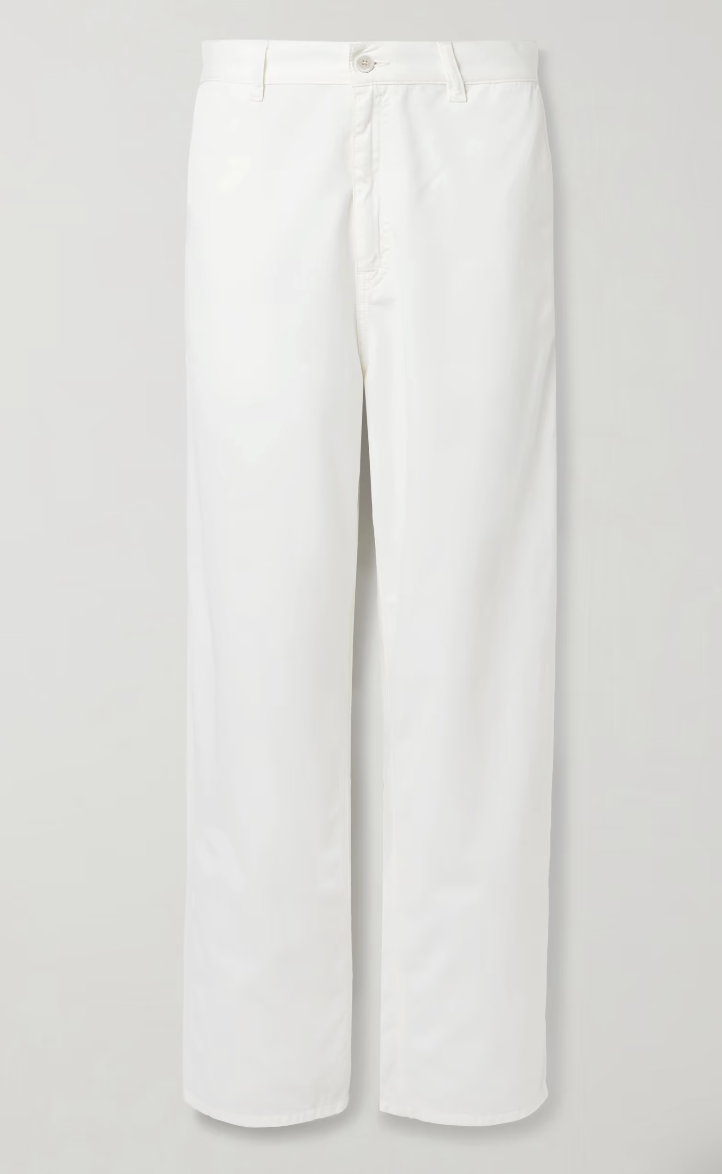
The New Power Dressing
For decades, power dressing followed a familiar formula. Sharp tailoring, structured blazers, and heels high enough to command attention across a boardroom table defined the visual language of ambition.
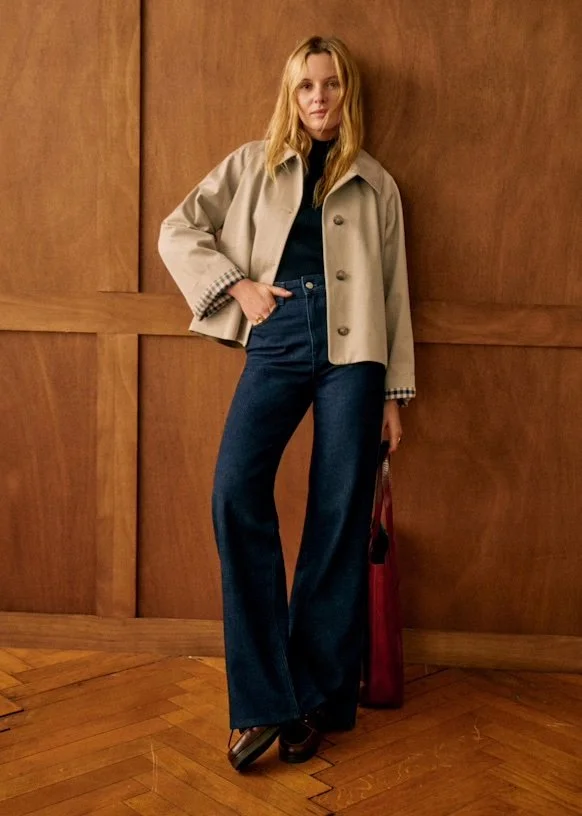
The Weight Lifts: Fashion as the Quiet Act of Release
For years, I carried an invisible load that settled once visibility became non-negotiable, without pause: the need to show up consistently, to signal progress, to remain legible in every room I entered.
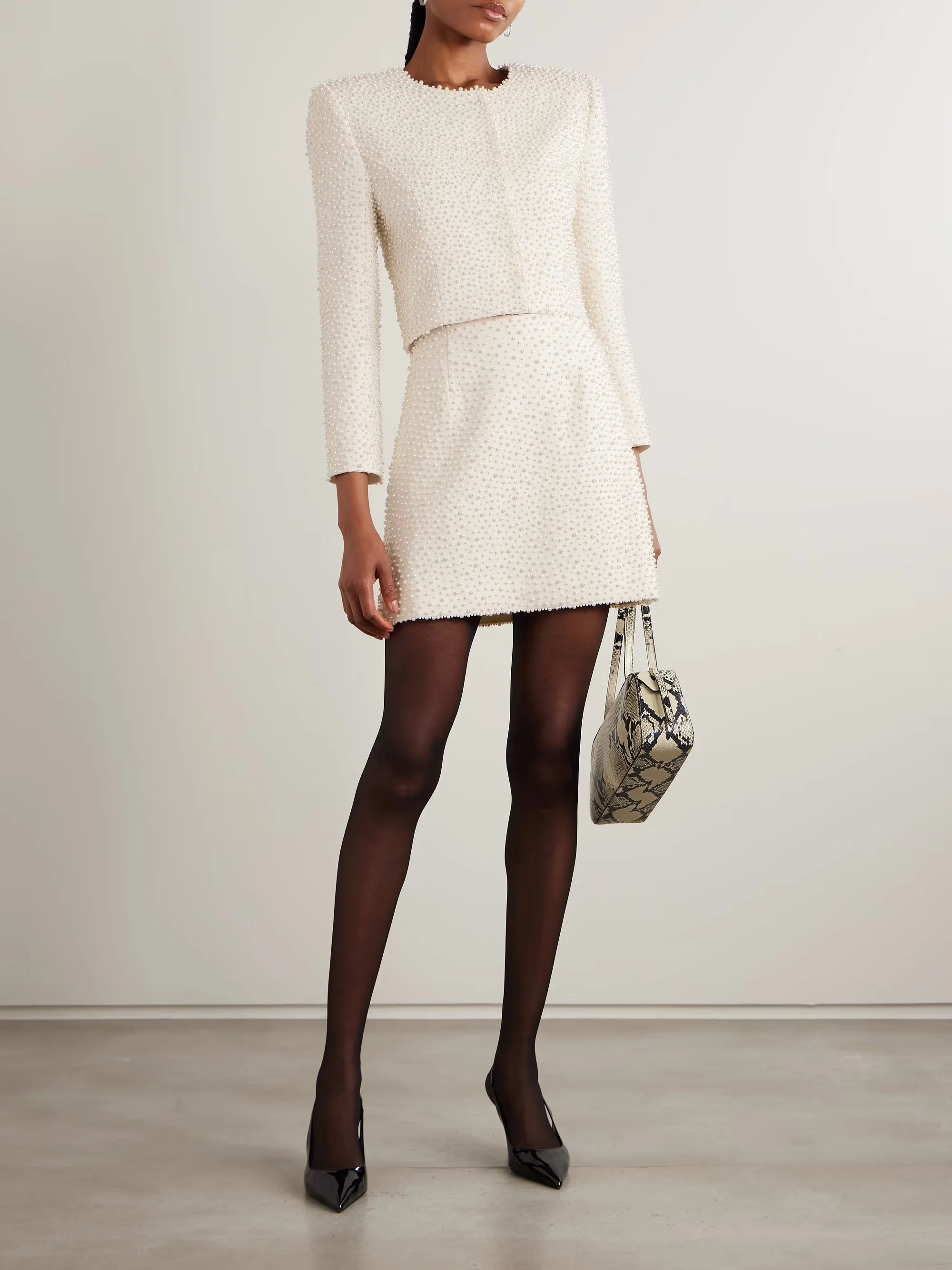
The Power of Presence
This week’s edit is about composure. About the kind of elegance that doesn’t compete for attention but holds it effortlessly. It’s not trend-driven. It’s structured, intentional, and deeply grounded.
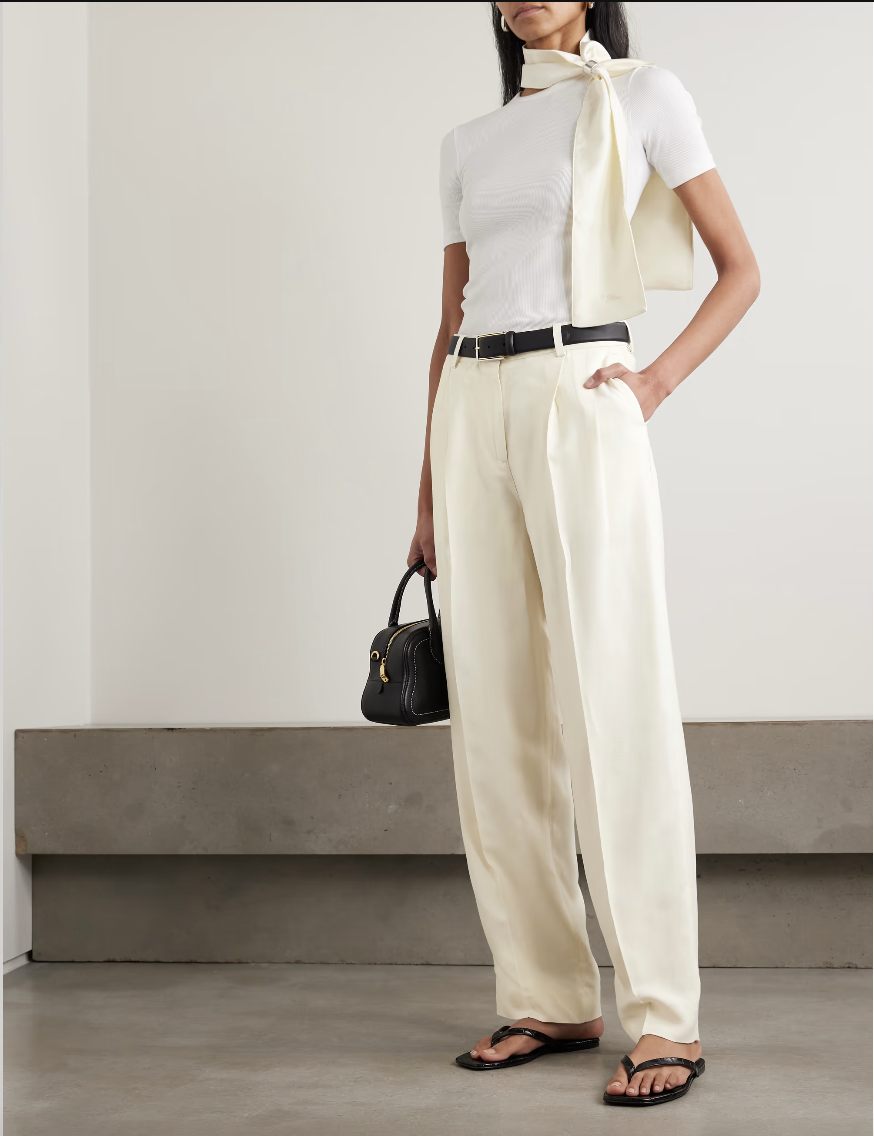
Cashmere, Ecru, and the Discipline of Becoming
There is a particular kind of quiet that settles in during transitional weather. Not winter anymore, not fully spring. The air carries a softness, but it hasn’t committed. The light lingers longer in the evening yet still feels delicate in the morning. Everything feels suspended — as if the season itself is deciding who it wants to be next.
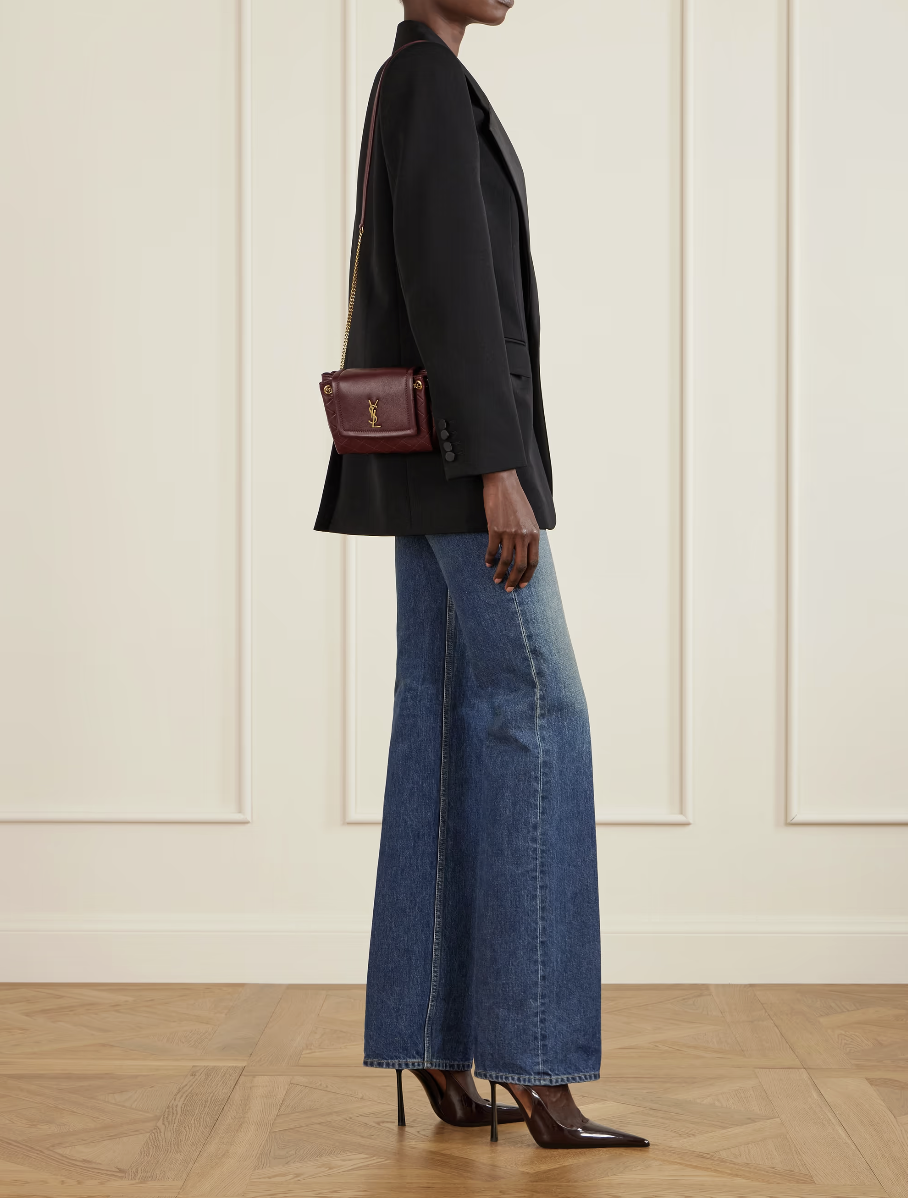
The Quiet Statement: Two Bags That Speak Without Shouting
In a cultural moment saturated with hyper-visibility and instantaneous trend cycles, true style isn’t about being seen by everyone; it’s about being noticed by the right eyes.
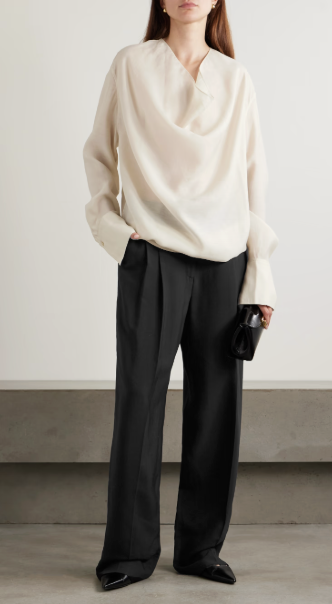
The Styled Edition: The Moment Success Stops Feeling Like Enough — and Style Becomes Quieter
There’s a moment that arrives quietly in every ambitious life.
The milestones still come.
The recognition still lands.
The success is still real.
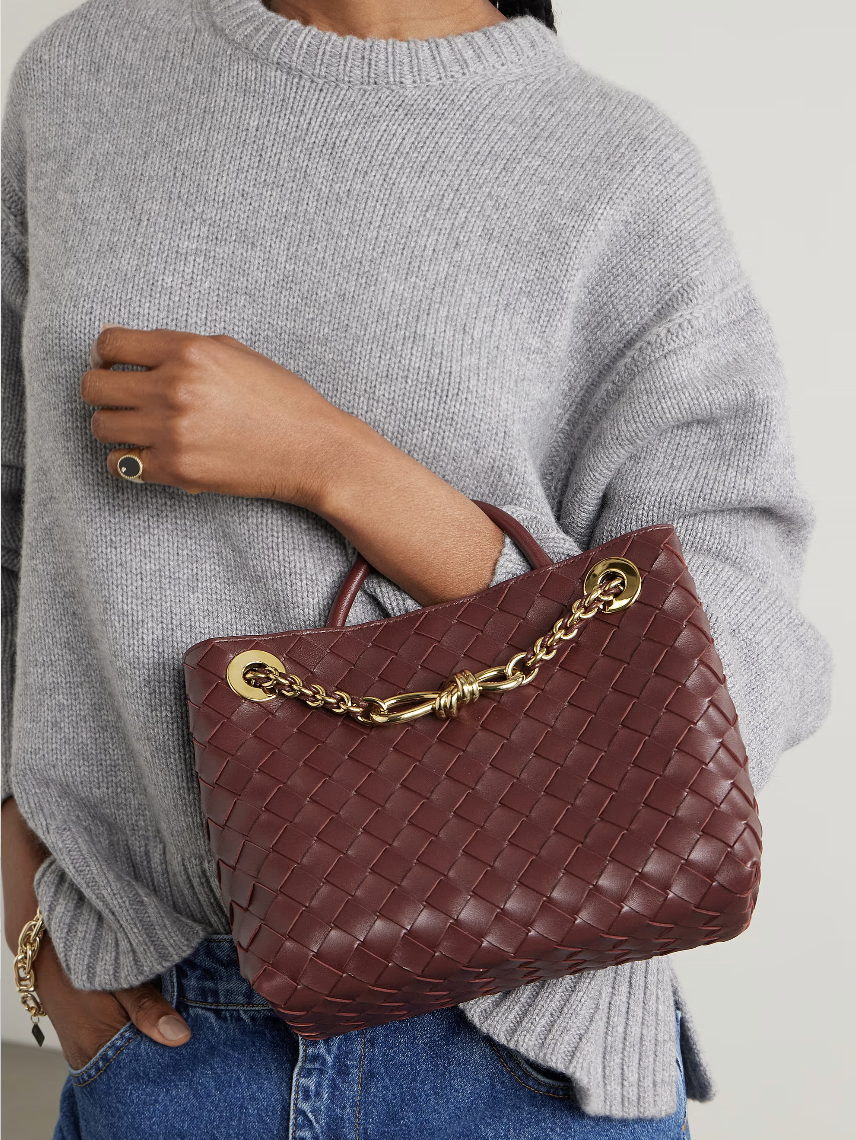
The Styled Edition: Quiet Pieces That Hold You Together
There’s a moment that comes, usually after you’ve built something meaningful, where more no longer feels like the answer.
More clothes.
More consumption.
Style Without Spectacle: What Grounds Me Now
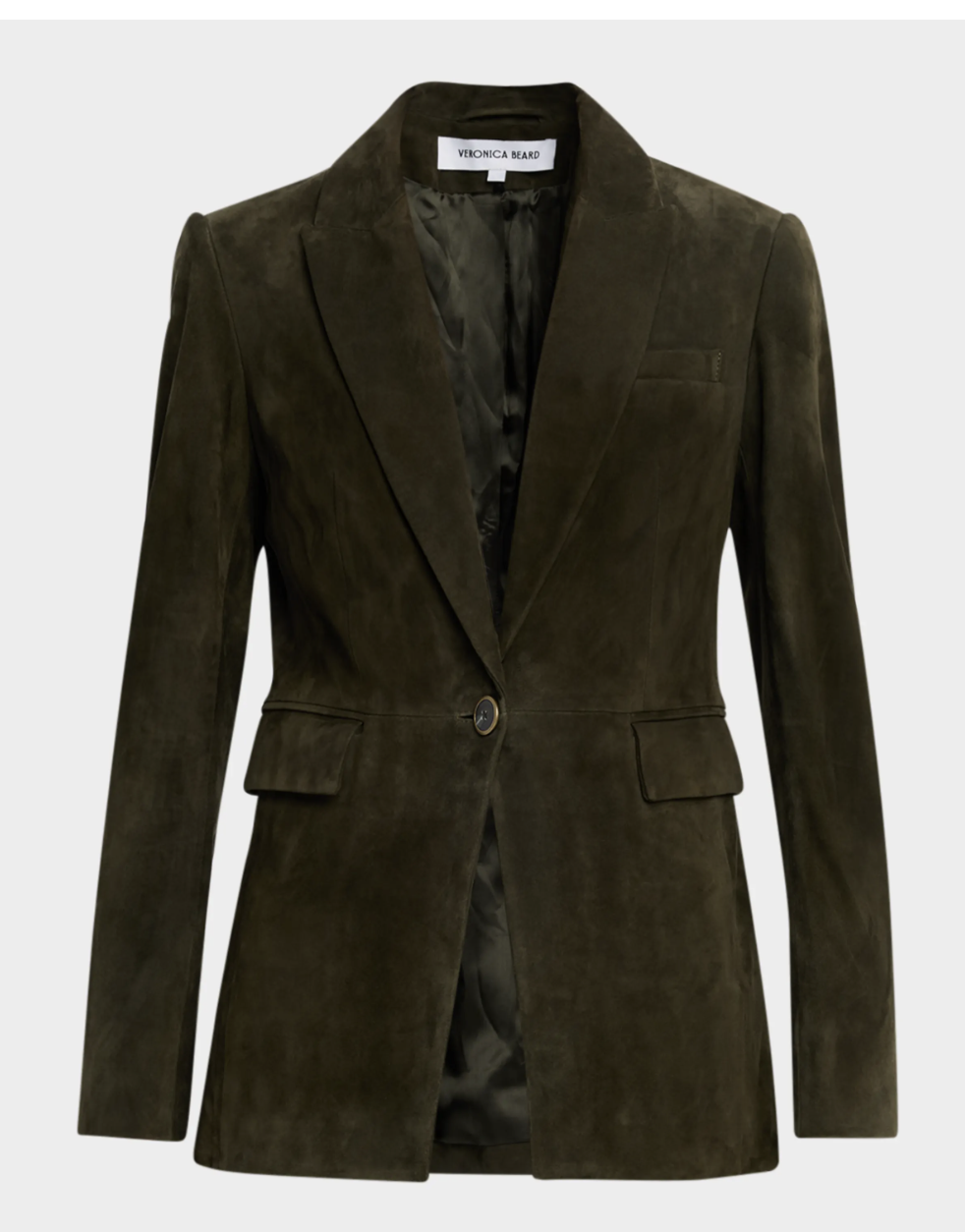
Lately, I’ve found myself wanting a simple blazer again—but not a sharp one, not something that feels like armor. Instead, I reach for a soft, tailored jacket in a muted blue or charcoal grey by Veronica Beard. It has shape, but it doesn’t demand attention. It’s a quiet reminder that structure doesn’t have to be severe to be effective.
When everything Slows: The Pieces that Stay
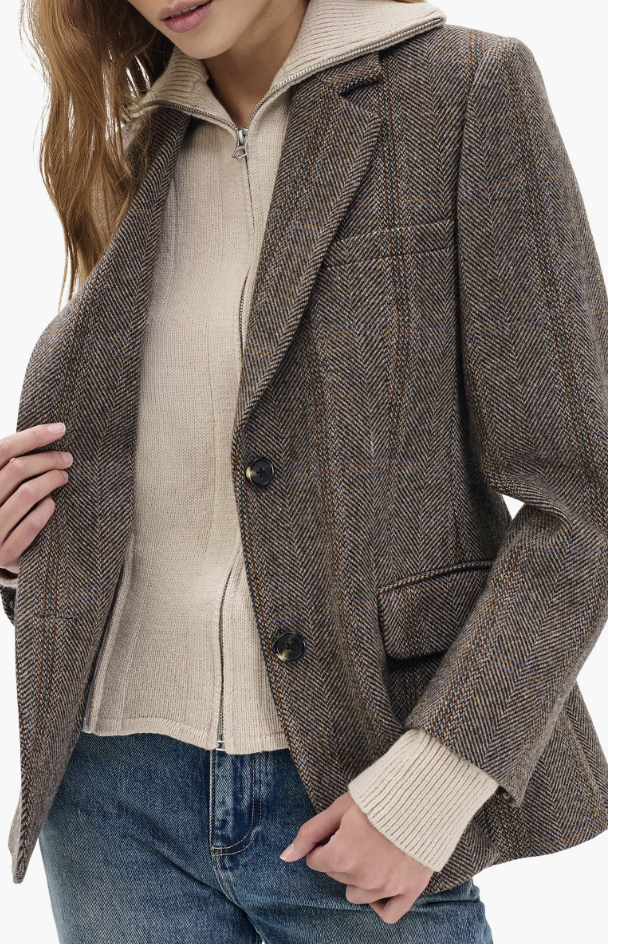
There is a moment, almost imperceptible, when what you reach for begins to change. Not because you need something new, but because what once felt necessary no longer does. The objects that remain are quieter. Heavier. More deliberate.